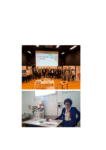
Anticipa – May 21, 2026
Here’s a summary of our participation in the Marine Resources Day organised by Anticipa on May 21, 2026 !
How can marine co-products be transformed into valuable resources for agriculture and the agri-food sector?
The event opened with a keynote presentation by Sterenn Lucas (Institut Agro Rennes-Angers) on the economic challenges and opportunities associated with the valorisation of marine co-products.Marine co-products refer to all materials that are not intended as the primary product for direct human consumption, including heads, viscera, skins, bones, shells, unsold products and non-target species. Depending on the sector, between 30% and 70% of the initial biomass can become co-products. Across Europe, approximately 511,000 tonnes of marine co-products are available each year. In France, around 210,000 tonnes are generated annually.
Key barriers identified
Three main categories of challenges were highlighted:
Logistical and technical challenges
- High perishability of raw materials
- Collection and transportation costs
- Heterogeneity of biomass
- Difficulties in achieving sufficient volumes for industrial processing
Economic challenges
- Significant investment requirements
- Uncertain profitability
- High costs associated with extraction and processing technologies
Regulatory and social challenges
- Compliance with sanitary regulations
- Consumer acceptance issues
- Supply chains that remain insufficiently structured
Four key levers for improving co-product valorisation
- Increased investment to foster technological innovation
- Stronger territorial and sectoral organisation of value chains
- Enhanced cooperation throughout the supply chain
- Continued public support and European policy incentives
Industry roundtables: practical examples and success stories
CultiMer
The shellfish producers’ association CultiMer has developed a self-fermentation process for undersized mussels (55°C for three days), producing a hydrolysate suitable for anaerobic digestion and shells that can be used in animal nutrition or agricultural spreading. An industrial-scale demonstrator has been operational in Le Vivier-sur-Mer since July 2025.
Agromousquetaires / Moulin de la Marche
The company processes 450 tonnes of salmonid skins annually into marine collagen hydrolysate and salmon oil, targeting joint health in pork production. A patent was filed in 2025.
SeaCaps
Led by Gwenaël Baudimant, SeaCaps focuses on the extraction and purification of complex marine lipids derived from fish, crustacean and mollusc co-products.
Algaia / JRS Group
Processing approximately 170,000 tonnes of brown seaweed annually, Algaia has implemented a biorefinery approach based on alginate production. Co-products are transformed into BIOSTIM agricultural biostimulants, solid residues marketed as AlgiFlor®, and clean-label functional ingredients for food and feed applications.
CSBT Environnement
The company has established Europe’s first large-scale scallop shell processing value chain, handling up to 30,000 tonnes annually. Applications include agriculture, cosmetics, pharmaceuticals and construction materials. The project required nine years of development due to regulatory, administrative and compliance challenges.
Seaweed Concept
Seaweed Concept develops odourless and tasteless seaweed-based ingredients for human food, animal feed and soil management through a fermentation process generating both liquid and solid products.
Aquafish Project
The Interreg-funded Aquafish project (www.aquafishproject.eu) has mapped marine co-products across the Atlantic Area and conducted opportunity assessments. Fourteen business plans were screened to identify three distinct valorisation models. The project is also developing a decision-support software tool, currently under validation, to assess the economic viability of marine co-product valorisation projects.
Three business scenarios were identified:
- Scenario 1: Gradual market entry with limited but stable volumes (200–500 tonnes/year)
- Scenario 2: Integrated model with secured supply streams (800–1,200 tonnes/year)
- Scenario 3: Specialised ingredient production, allowing variable volumes and heterogeneous biomass sources
Key takeaways from the discussion session
Securing biomass supply is critical
Participants agreed that sourcing remains the primary challenge, particularly ensuring sufficient and long-term availability of co-products.
Commercial development requires time
Introducing new ingredients into established markets is a lengthy process. End-users may be reluctant to modify existing formulations or practices, making change management a key consideration.
Consumer perception remains mixed
While consumers generally support circular economy initiatives in principle, products derived from co-products may still face hesitation or scepticism in practice.
Respecting the biomass value hierarchy
The importance of prioritising biomass uses was reiterated:
- Food
- Soil application
- Material recovery
- Chemical applications
- Energy production
Highlighting environmental benefits
The economic value of avoided emissions should be better communicated. As an example, valorising one tonne of shells can save approximately 400 kg of carbon emissions, creating measurable environmental and economic value.
Collaboration is essential
Successful projects require strong partnerships, expert guidance and collaborative approaches. Stakeholders were encouraged to seek support, build networks and develop strategic alliances.