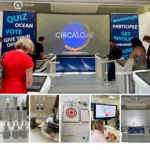
Co-designing the Future of Algae: A day of creativity, collaboration and consumer Insights
How do we turn algae from an overlooked marine resource into products that people genuinely want to use? That was the central question driving the CIRCALGAE co-design workshopsa full day of interactive discussions, creative challenges, and hands-on testing that brought together participants to imagine the future of algae-based innovation.
Rather than presenting ready-made solutions, the workshops placed participants at the heart of the innovation process. Through collaborative activities, debates, and product testing, attendees explored how algae could become part of everyday life while providing valuable insights into consumer expectations, barriers, and opportunities.
Starting with Fresh Perspectives
The day began with a warm welcome and an introduction to the CIRCALGAE project, whose ambition is to fully valorise industrial macro- and microalgae residues to develop sustainable ingredients for food, cosmetics, and animal feed within a circular blue biorefinery model. An icebreaker quickly set the tone: Two Truths and One Lie encouraged participants to get to know one another before diving into a thought-provoking discussion about algae. Participants shared the very first word that came to mind when hearing “algae” and debated which applications they believed held the greatest economic potential.
Creativity Meets Circular Innovation (first co-design activity)
The first co-design workshop challenged participants to think beyond conventional uses of algae.
Working in teams, participants randomly combined different sectors—from fashion and architecture to logistics, mobility and education—with unique algae properties such as biodegradability, flexibility, filtration or self-regeneration. Their mission was simple: invent entirely new product concepts.
The result? A remarkable variety of imaginative ideas demonstrating just how versatile algae-derived materials could become. But creativity was only the beginning. Each team then explored practical questions:
- What barriers could prevent adoption?
- Which arguments would convince consumers?
- Who would be the target users?
- Where should these products be sold?
The exercise highlighted an important lesson: successful innovation is not only about developing sustainable materials—it is equally about designing products that answer real market needs and consumer expectations.
Understanding Consumer Perceptions in Cosmetics (2nd co-design activity)
The morning continued with a dedicated cosmetics co-design session focused on one of the project’s application areas.
Participants worked with fictional consumer profiles—from athletes and children to elderly people and industrial workers to identify potential objections towards algae-based cosmetic products. Teams then exchanged their ideas and developed convincing counterarguments, transforming concerns into selling points. Creativity reached another level when each group designed a mock advertising campaign, complete with product concepts, slogans, promotional posters and marketing pitches. These exercises encouraged participants to rethink how algae can be communicated—not as an unusual ingredient, but as a source of natural performance, sustainability and innovation. The session concluded with the presentation of CIRCALGAE cosmetic products and a hands-on evaluation of algae-based hand cream, allowing participants to directly experience the products they had been discussing.
Challenging Assumptions About Algae in Food (3rd and last co-design activity)
After lunch, the focus shifted towards food applications. Participants positioned themselves along an agreement spectrum to react to statements such as:
- Consumers are not ready to eat algae-based products.
- We already consume algae without knowing it.
- Algae-based foods are more environmentally friendly.
- Algae are a good alternative to animal proteins.
These discussions revealed diverse opinions while encouraging participants to question common misconceptions surrounding algae consumption.
The workshop then introduced several food products developed within the CIRCALGAE project including protein-rich snacks, Energy Balls, tea-based beverages and bakery products—which participants discovered through visual observation, discussion and sensory evaluation.
From First Impressions to Valuable Consumer Insights
Participants assessed the product (snack) using a consumer perception radar, evaluating aspects such as trust, naturalness, desirability, familiarity, environmental friendliness and overall appeal. Beyond scoring the product, discussions focused on understanding why consumers might hesitate—and what could ultimately convince them to adopt algae-based alternatives.
The sensory tasting sessions generated particularly rich feedback, helping identify both the strengths of the product (energy ball) and the improvements needed to facilitate wider market acceptance. These insights will directly contribute to the market analysis activities of the CIRCALGAE project and support the development of products that better meet consumer expectations.
Co-Designing Tomorrow’s Blue Bioeconomy
The workshops demonstrated that innovation is most powerful when future users become active contributors rather than passive observers.
By combining scientific expertise with consumer creativity, CIRCALGAE is not only developing sustainable algae-based products—it is building a deeper understanding of how these innovations can successfully reach the market. Throughout the day, participants challenged assumptions, generated original ideas, tested innovative products, and shared honest opinions that will help shape the next generation of algae-derived solutions.
Together, they contributed to a shared ambition: accelerating Europe’s transition towards a circular, sustainable and competitive blue bioeconomy where algae become a familiar, trusted and valued resource for everyday life.